 50-CENTS | An IAS Institute.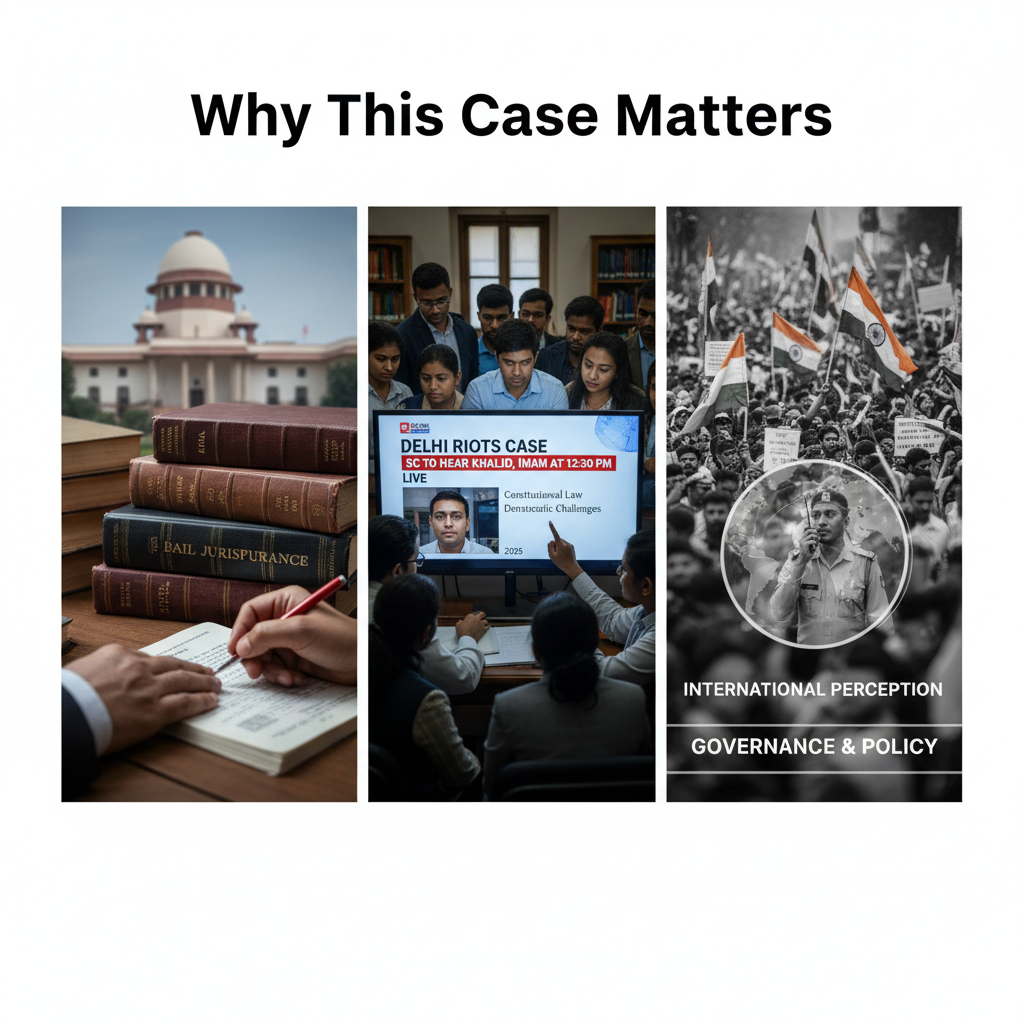
Key Points Summary
-
Landmark Case Importance
-
This Supreme Court hearing shapes modern Indian constitutional law, policing, and civil rights, having extensive international attention and policy relevance for UPSC/diplomats.
-
-
Historical Timeline
-
The riots spanned February 23–26, 2020, beginning with CAA protests and escalating to deadly communal clashes, resulting in 53 fatalities and over 700 injuries.
-
Initial scrutiny of police response and selective investigations.
-
-
Judicial/Police Actions (2020–2025)
-
Multiple FIRs under IPC, UAPA, Arms Act; Umar Khalid and Sharjeel Imam arrested, denied bail at multiple levels due to severity and UAPA charges.
-
Repeated high-profile bail appeals citing conspiracy allegations; courts reference “premeditated, sinister conspiracy”.
-
-
Key Developments to October 2025
-
Delhi High Court rejected bail pleas on September 2, 2025.
-
Supreme Court is hearing the bail pleas on October 31, 2025, on grounds of prolonged custody and legal merits.
-
-
Legal & Evidence Overview
-
Delhi Police claims a nationwide conspiracy for regime change, presenting 389-page affidavit, call records, WhatsApp chats, speeches.
-
Police uphold "jail not bail" mantra for UAPA; technical and digital evidence is submitted.
-
-
Defense Standpoint
-
Senior advocates argue about denial of justice due to extended incarceration without trial, question strength of evidence, and constitutionality of applying UAPA.
-
-
Supreme Court's Critical Role
-
SC pressed Delhi Police to justify prolonged detention and consider bail for those awaiting trial for years.
-
The judgment is set to influence bail standards for protest-linked UAPA cases.
-
-
UPSC/Policy Implications
-
Case highlights tension between civil liberties and public order.
-
Evolving law on “conspiracy”, “sedition”, “unlawful assembly”, and preventive detention.
-
Diplomats must note impacts on India’s human rights reputation and strategic narratives, especially during major international events.
-
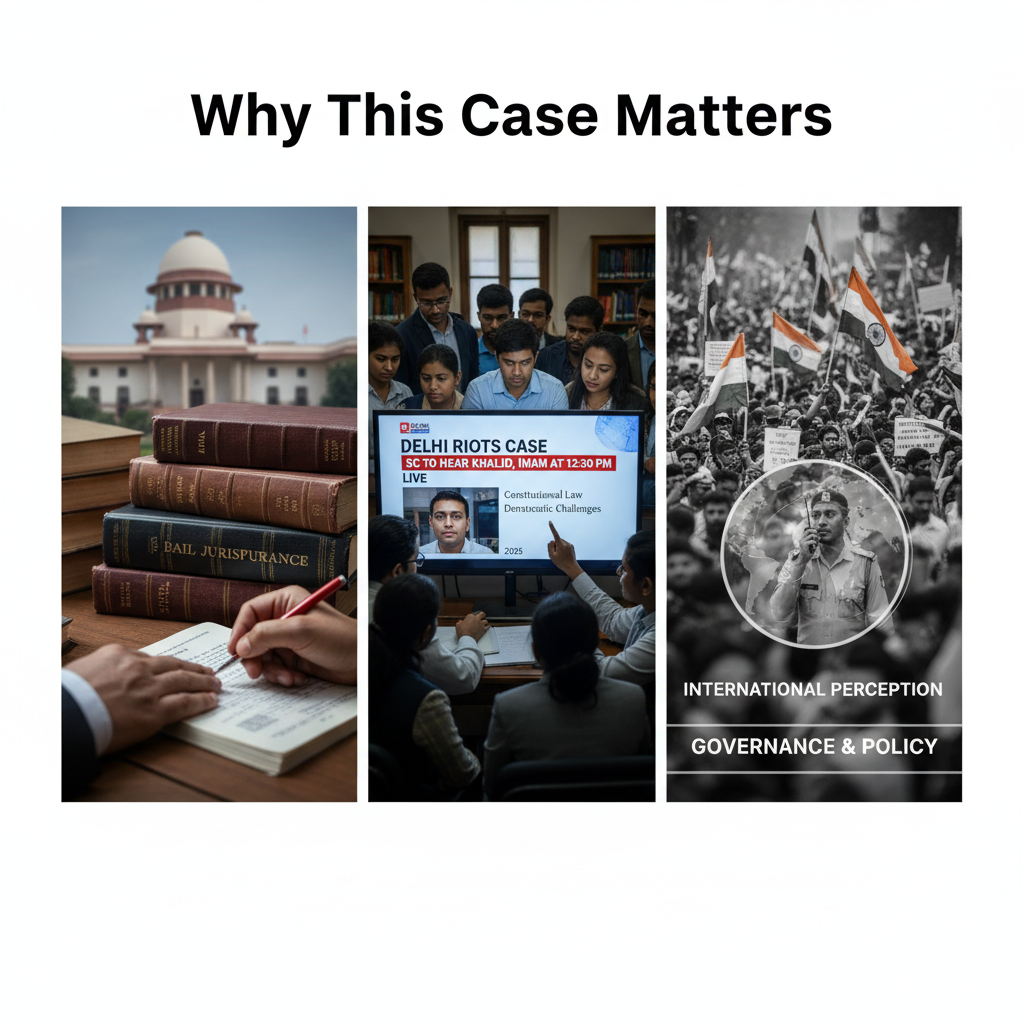
Why the Supreme Court’s 2020 Delhi riots bail hearing for Umar Khalid and Sharjeel Imam is shaping constitutional law and governance debates in India.
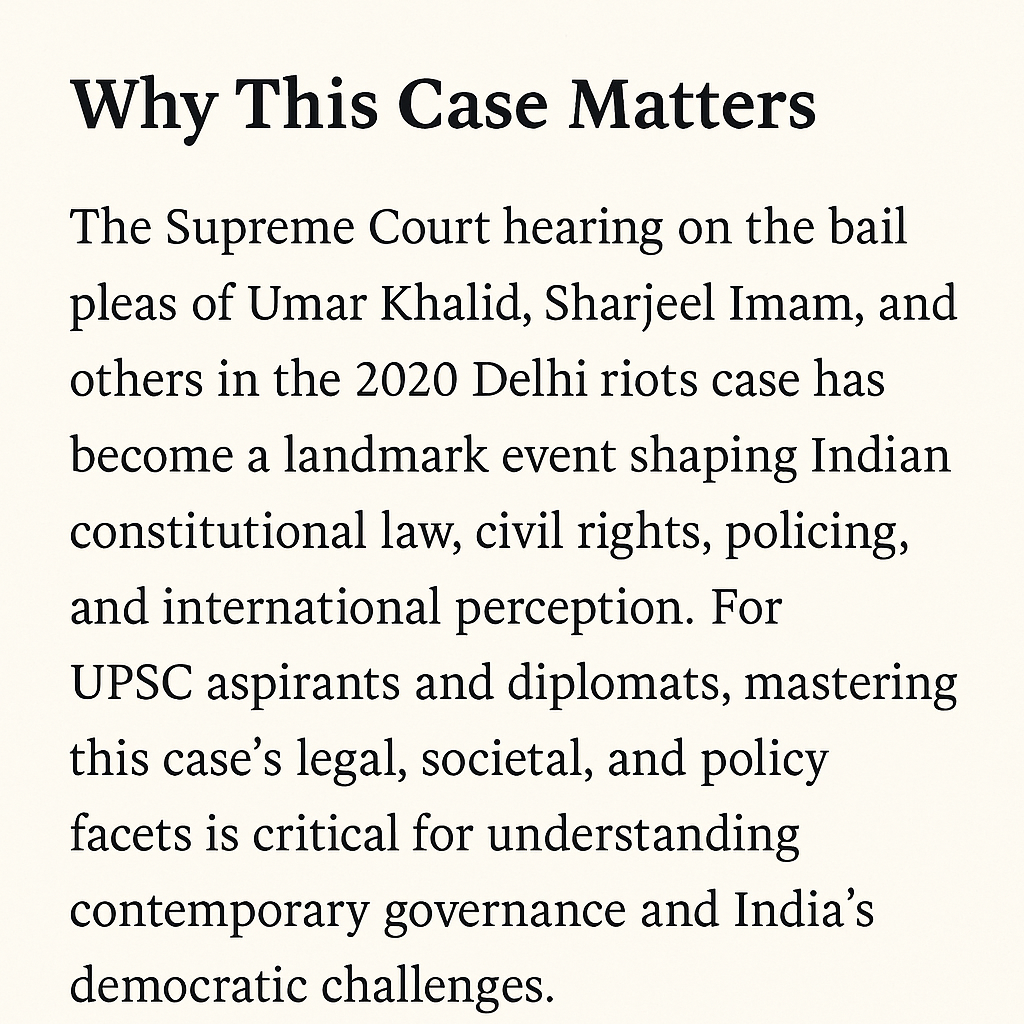
'Why This Case Matters': Supreme Court bail hearing on Delhi riots is shaping Indian law, rights, and governance awareness.
Introduction: Why This Case Matters
The Supreme Court hearing on the bail pleas of Umar Khalid, Sharjeel Imam, and others in the 2020 Delhi riots case has become a landmark event shaping Indian constitutional law, civil rights, policing, and international perception. For UPSC aspirants and diplomats, mastering this case’s legal, societal, and policy facets is critical for understanding contemporary governance and India’s democratic challenges.
Part 1: Delhi Riots Case – The Historical Timeline
1. The 2020 North East Delhi Riots
-
The violence erupted between February 23–26, 2020, rooted in protests over the Citizenship Amendment Act (CAA), and quickly escalated into deadly clashes between communities in North East Delhi.
-
53 people were killed, 700+ injured; massive property damage occurred.
-
Initial criticisms targeted police inaction and selective investigation.
2. Major Judicial and Police Actions (2020–2025)
-
Multiple FIRs lodged under the IPC, UAPA, and Arms Act.
-
Umar Khalid arrested in September 2020 on charges of conspiracy, unlawful assembly, and instigating violence.
-
Sharjeel Imam arrested and charged with sedition and conspiracy.
-
Bail pleas consistently rejected at trial and appellate level based on the gravity of charges and the UAPA.
3. Key Developments Leading to October 2025
-
High-profile appeals and rejections: Multiple courts cited “planned, sinister conspiracy” instead of spontaneous riots.
-
September 2, 2025: Delhi High Court denies bail due to grave roles and alleged premeditation.
-
October 31, 2025: Supreme Court to hear bail pleas on grounds of extended custody and legal merits.
Part 2: Supreme Court Hearing – Legal and Evidence Overview
1. Delhi Police’s Affidavit and Conspiracy Claims
The Delhi Police, through a meticulous 389-page affidavit and technical evidence, alleges that Khalid, Imam, and associates engineered a nationwide conspiracy for “regime change” by inciting communal violence under the guise of peaceful protest.
-
Accused of misusing anti-CAA sentiment to create global attention and destabilize the Indian state.
-
Technical evidence includes:
-
WhatsApp chats referencing the US President’s visit.
-
Speeches and messages allegedly designed to inflame crowds.
-
Meetings and planning traced via call records and witness depositions.
-
-
Police insist “jail, not bail” is the rule for UAPA offenses due to threat to national security.
2. Defense Arguments
Senior advocates Kapil Sibal, Abhishek Manu Singhvi, and Dushyant Dave for the accused argue:
-
Long periods of incarceration without trial are an abuse of due process.
-
Evidence is circumstantial, witness statements allegedly contradictory, and legal standards for invoking UAPA not met.
3. Supreme Court’s Role
-
The Supreme Court asked Delhi Police to justify prolonged custody and consider bail for those nearing five years in jail.
-
Bench: Justices Aravind Kumar and N.V. Anjaria.
-
Decision will impact guidelines on bail for UAPA offenses, protest-related violence, and pretrial detention standards for future cases.
Part 3: UPSC, Legal and Diplomatic Analysis
1. Law and Society
-
Legal Framework: UAPA (1967) is intended for extraordinary threats; concerns about misuse against civil society are at the forefront.
-
Judicial Precedent: The case is significant for setting standards on what constitutes “larger conspiracy”, threshold for bail under UAPA, and the rights of political dissidents.
-
Constitutional Questions: Balancing fundamental rights (speech, protest, liberty) vs. state security.
2. Policy Ramifications
-
The case has global implications — international media and rights groups view it as a test of India’s constitutional democracy.
-
UPSC aspirants must understand the interplay:
-
Protest rights vs. public order.
-
Interpretation of legal terms: “conspiracy”, “sedition”, “unlawful assembly”.
-
Police accountability and the architecture of indefinite detention.
-
-
Diplomats focus on:
-
India’s image abroad.
-
Rule of law and due process.
-
Impacts on strategic narratives during high-profile events (e.g., US President’s visit).
-
Part 5: Concluding Insights and the Way Forward
The outcome of the Supreme Court’s consideration of bail for Umar Khalid, Sharjeel Imam, and others in the Delhi riots case will resonate widely across India’s legal and political frameworks. The judiciary’s approach in balancing national security and civil liberties, especially under UAPA, will set precedent for future protests, movements, and governance debates.
UPSC aspirants and diplomatic professionals must learn from the procedural nuances, emerging legal principles, and broader constitutional debates illuminated by this pivotal case.
Key Takeaways
-
The case tests the boundaries of protest, dissent and security in India.
-
Bail jurisprudence under UAPA is evolving through such landmark hearings.
-
Understanding the evidence, judicial reasoning and policy outcomes here delivers critical value for exam, governance, and international dialogue.
Endnotes & Sources:
All facts and events verified from: Supreme Court Observer, Bar & Bench, LawBeat, Indian Express, India Today, The Hindu archive
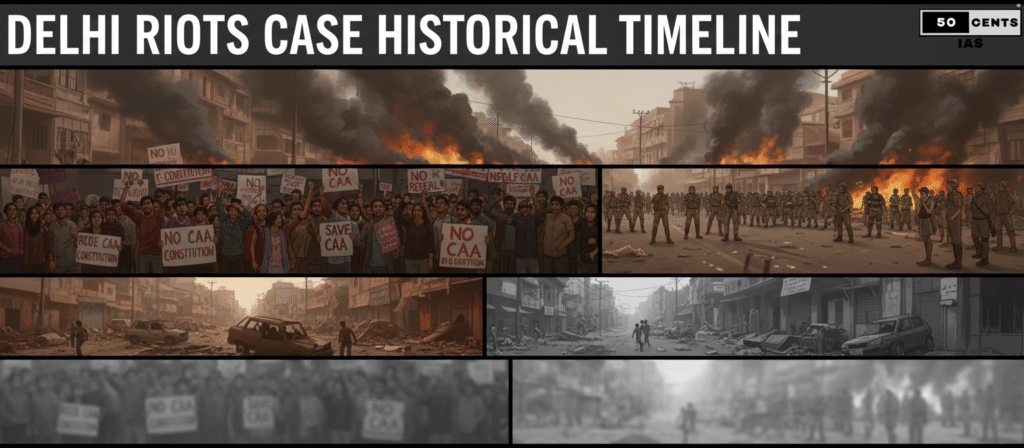
Delhi Riots Case 2020: Timeline of CAA protests, communal clashes, casualties, and police action. 50 CENTS IAS branding.
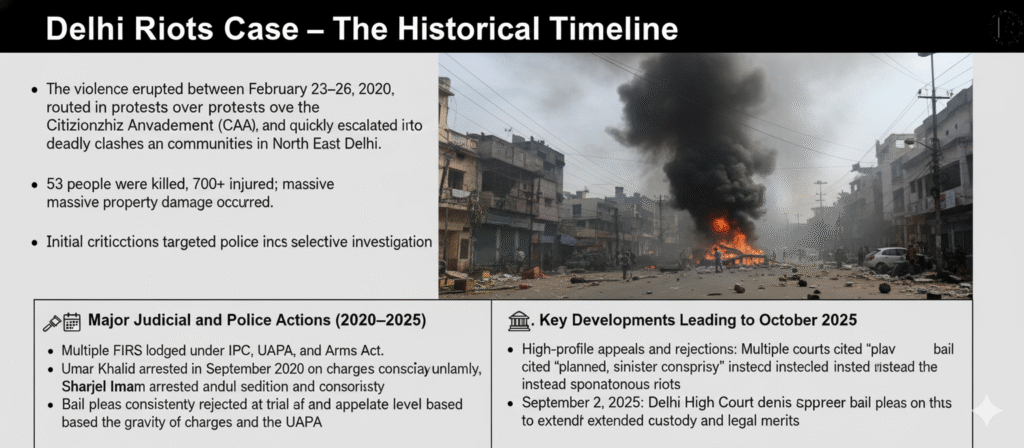
A comprehensive historical timeline of the 2020 Delhi Riots Case, detailing the genesis of the violence, key judicial and police actions, and significant developments impacting the ongoing bail hearing, essential for UPSC aspirants.
Delhi Riots Case Bail Hearing: UPSC-Level FAQ
1. What triggered the 2020 Delhi riots?
The 2020 Delhi riots began as communal clashes linked to protests against the Citizenship Amendment Act (CAA), escalating quickly in North East Delhi between February 23 and 26, resulting in over 50 deaths and hundreds injured.
2. What are the key charges against Umar Khalid and Sharjeel Imam?
Both are accused of criminal conspiracy, sedition, rioting, and instigating violence under IPC, UAPA, and other laws. They were arrested for allegedly masterminding and executing plans for violence and regime change.
3. What legal standards affect bail under UAPA?
UAPA sets stringent conditions for bail, requiring courts to find no prima facie case of involvement in terrorist or unlawful activities. Prolonged custody and strict evidentiary standards apply, making bail in such cases rare.
4. What evidence did Delhi Police present in the Supreme Court?
Police affidavits included WhatsApp chats, call records, witness statements, and detailed technical tracking to show alleged planning and execution of violence.
5. What main arguments do the defense present?
Defense lawyers argue that the accused face extended pretrial incarceration, the evidence is circumstantial, and UAPA has been misapplied against civil protestors. They stress constitutional rights and procedural fairness.
6. Why is this case important for constitutional law and civil liberties?
The case centers on the balance between national security and rights to protest, speech, and liberty. Judicial standards for “conspiracy,” “sedition,” and preventive detention are being tested, carrying implications for future legal and governance frameworks.
7. What is the Supreme Court’s current role in the case?
The Supreme Court is re-examining bail pleas due to extended pretrial detention (about five years) and has asked Delhi Police to justify the necessity for further custody. The outcome will impact future UAPA bail hearings.
8. How does this case impact India’s global image and diplomacy?
International observers and rights organizations view this as a test case for India’s protections of civil rights and due process, affecting diplomatic narratives and perceptions of Indian democracy.
9. What lessons should UPSC aspirants draw from this case?
Aspirants must grasp the nuances of protest legislation, criminal procedure, bail jurisprudence under UAPA, the role of judicial processes in democracy, and how law intersects with policy and rights in high-tension events.
10. Where can one find official updates and documentation on this case?
Reliable sources include The Hindu, Bar & Bench, LawBeat, Supreme Court Observer, and official Supreme Court and Delhi Police documents.
50-CENTS IAS Institute – Empowering UPSC Aspirants Across India
https://www.youtube.com/watch?v=8Zhu6Ths490
0 Comments