Successful Newsletter Launch: What You Need to Know
Introduction
Civic sense is often considered the invisible thread that holds the fabric of a democracy together—a silent contract between an individual and the community that demands responsibility, respect, and restraint. India, with its vibrant tapestry of cultures, languages, and histories, has long celebrated the ideals of democracy and citizenship. Yet, the reality on the ground paints a far more complicated picture. From the crowded streets of its urban centers to the solemn halls of government secretariats, the absence of sincere civic sense remains a glaring challenge.
When one steps out into the bustling roads, witnessing people littering without shame, blaring horns in ceaseless chaos, and trampling over basic rules, the question inevitably arises: Where has our collective civic conscience gone? But the problem doesn’t end there. As one peers inside offices where policies are made, a troubling deficit of civic responsibility and accountability also comes to light. It is within this paradox—between constitutional promises and societal conduct—that lies one of India’s enduring dilemmas.
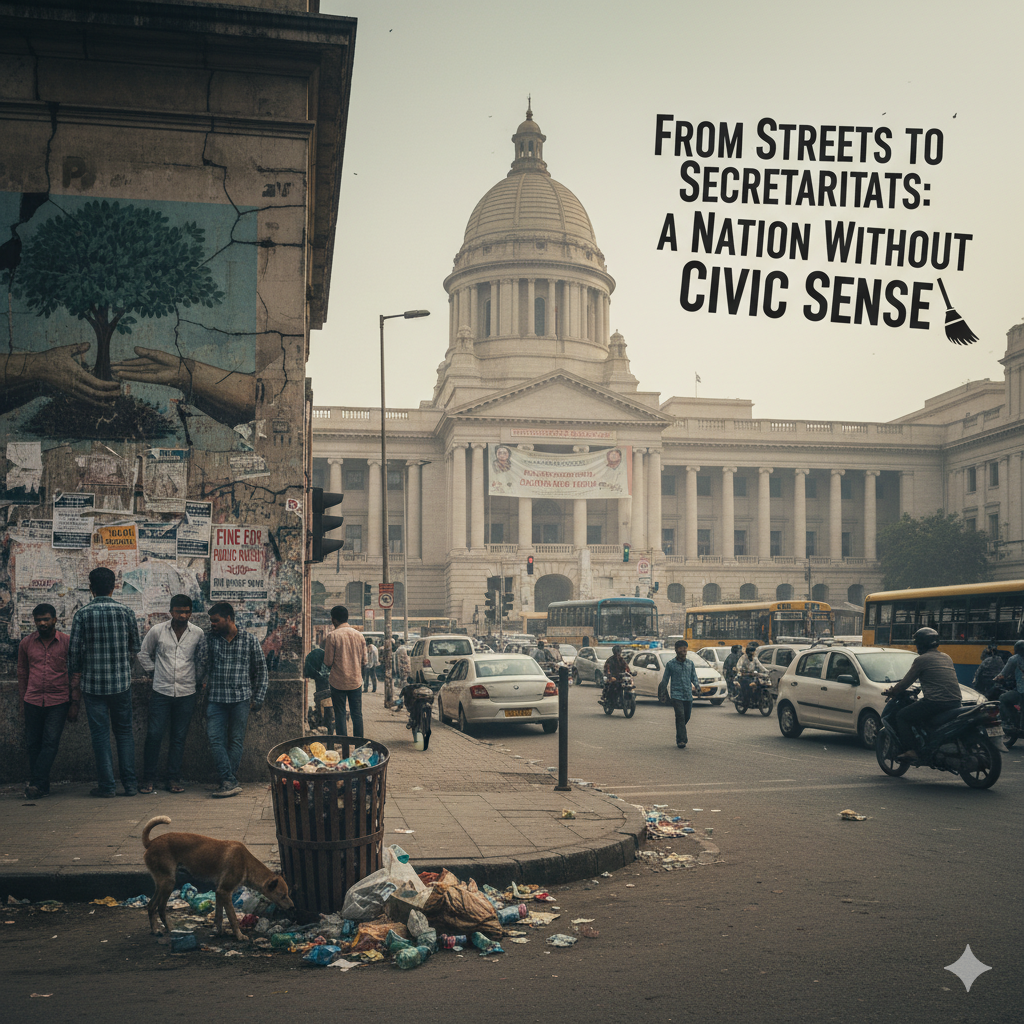
From the bustling, often neglected streets to the grand secretariats that shape policy, this image encapsulates the widespread challenge of civic sense in India. A nation's progress is often reflected in its public spaces. What changes do you think are most needed? #CivicDuty #PublicSpaces #IndiaProgress #Government
The stark reality of a nation struggling with civic responsibility: overflowing bins, disregarded litter, and the enduring presence of administrative power. This visual prompts reflection on our collective role in building a better, cleaner India. 'From Streets to Secretariats: A Nation Without Civic Sense.' #CleanIndia #IndianCities #SocialResponsibility
The Roots of the Problem: A Disconnect in Education and Leadership
Our schools theoretically teach young minds about civic duties and social responsibilities, but rarely do these lessons translate into genuine behavioral change. The failure is not merely of curriculum but of context and intent. Children memorizing the lines about the importance of cleanliness or obeying laws don't witness these values being practiced or upheld consistently by the adults around them.
It is a somber indictment when even the very individuals entrusted with upholding civic virtues—our IAS and IPS officers, our elected representatives—often appear detached from these ideals. Instances of public indiscipline, bureaucratic apathy, and political shenanigans are not just symptoms but signs of a leadership disconnected from the ethos of civic responsibility. How then can the common citizen be expected to embody what their leaders fail to demonstrate?
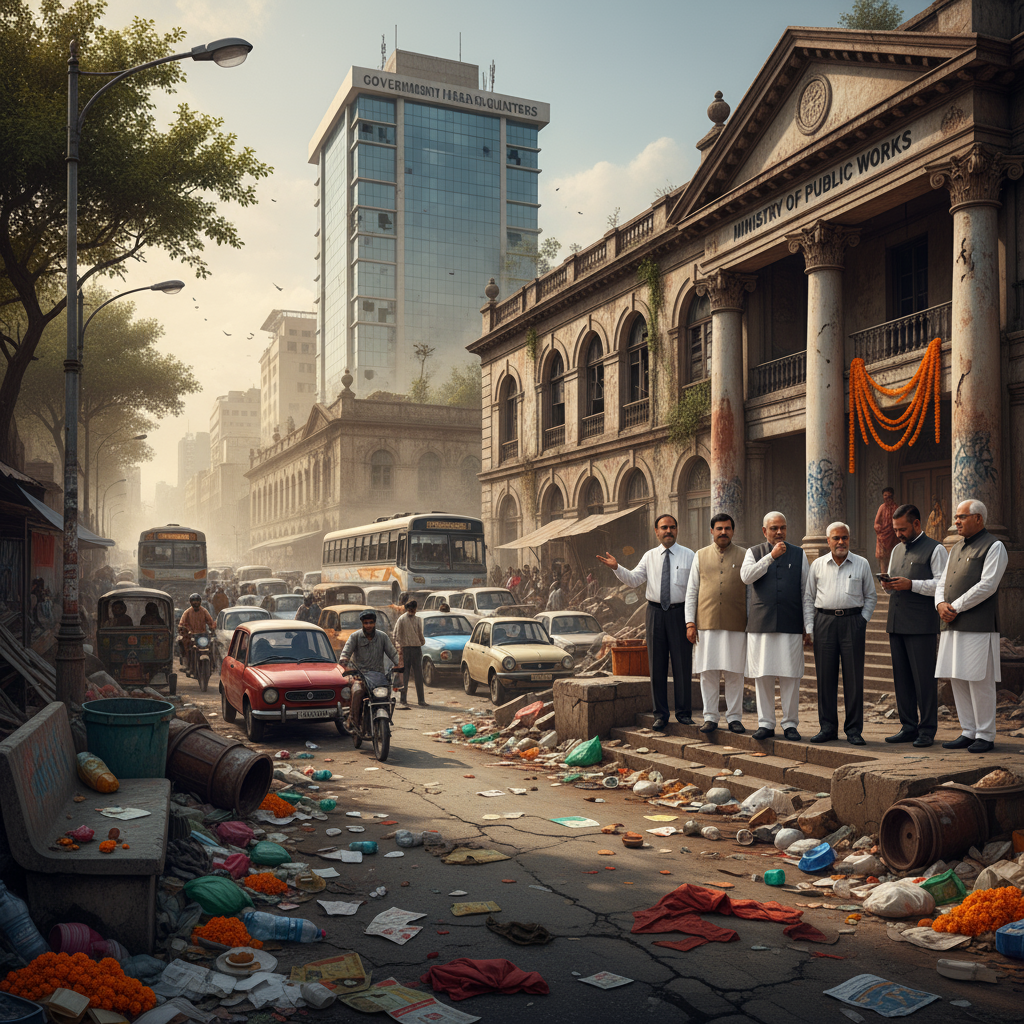
Stark depiction of civic neglect in India showing chaotic public spaces and indifferent political and bureaucratic leadership, reflecting the urgent crisis of zero civil sense and governance failure.
Civic Sense on the Streets: The Public Face of a Collective Malaise
From rushing through red lights to openly discarding waste in public spaces, urban India often reflects a microcosm of civic neglect. The "mera kya jaata hai" mentality speaks volumes about a prevalent attitude that places personal convenience over public good. This mindset, however, is not born in a vacuum but nurtured by weak enforcement of laws, inconsistent governance, and infrastructural bottlenecks.
Public spaces, streets, parks, and transport hubs bear the brunt of this deficit. The result is a cityscape marked by disorder, where civic neglect manifests as more than just aesthetic pollution but becomes a threat to public health and safety.
From Streets to Secretariats: A thought-provoking look at India’s lost civic discipline.
The Silent Crisis Within Secretariats
While civic indiscipline is conspicuous on the streets, it quietly permeates the corridors of power. The bureaucracy, expected to exemplify integrity and dedication, often finds itself mired in red tape, corruption, and lethargy. Citizens experience this as delays, incompetence, and a lack of empathy.
Moreover, political leadership frequently fails to model the civic virtues it demands from the public. This disconnect fosters a culture of impunity and further erodes public trust—a core ingredient for any democracy's success.
Long-Term Loss: A Generation at Risk
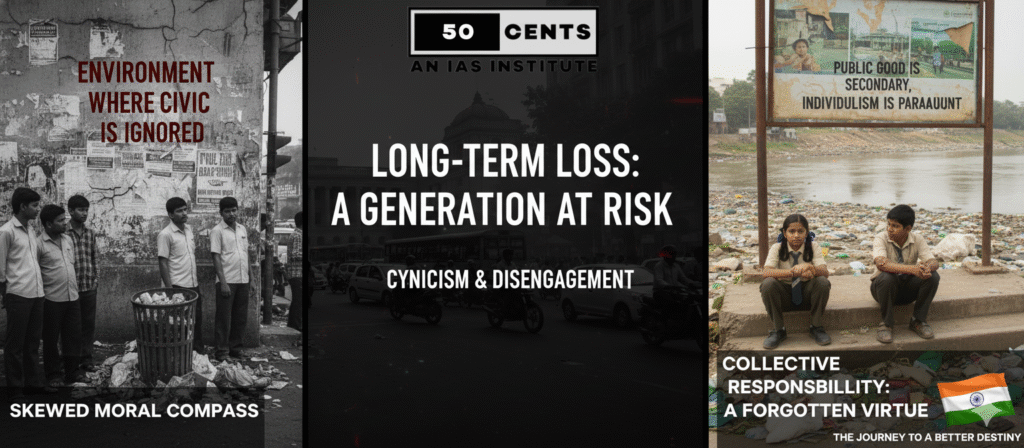
The cost of this widespread civic deficit is most keenly borne by the youth of the nation. Growing up in an environment where basic civic sensibilities are either ignored or violated cultivates in them a skewed moral compass. When public behavior consistently contradicts the lessons taught in schools, cynicism and disengagement ensue.
Such a scenario threatens not only immediate social cohesion but also the long-term prospects of India’s democratic and developmental aspirations. The next generation may well inherit a societal structure where public good is secondary, individualism is paramount, and collective responsibility is a forgotten virtue.
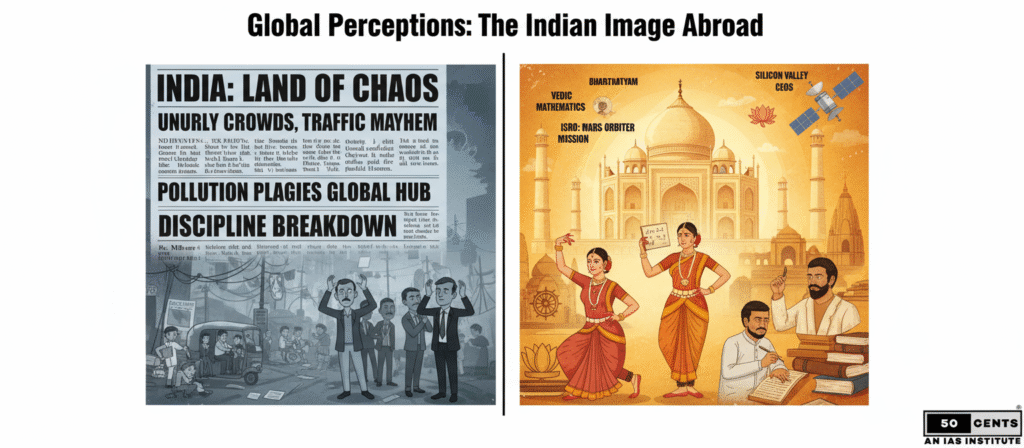
A compelling visual contrast of international stereotypes versus India’s heritage, emphasizing the critical need for nurturing civic sense, branded with 50 CENTS IAS Institute logo.
Global Perceptions: The Indian Image Abroad
Globally, these domestic shortcomings echo in the perception of Indians. Overseas, Indians grapple with stereotypes of unruly behavior, disregard for laws, and lack of civic discipline. Such impressions, often amplified by media and isolated incidents, cast a shadow on India’s rich cultural and intellectual heritage.
While there is scope for change, improving this image requires not just policy reforms at home but also conscious efforts by the diaspora and government in promoting accountability and civic culture.
Long-Term Loss: A Generation at Risk. When civic sensibilities are ignored, what kind of moral compass do our youth develop? This image powerfully illustrates the threat of cynicism and disengagement, where collective responsibility becomes a forgotten virtue. The future of India's democratic and developmental aspirations hinges on addressing this crisis. #IndianYouth #FutureGenerations #SocialCohesion #CivicCrisis #50CentsIAS
Pathways to Redemption: Can the Tide Turn?
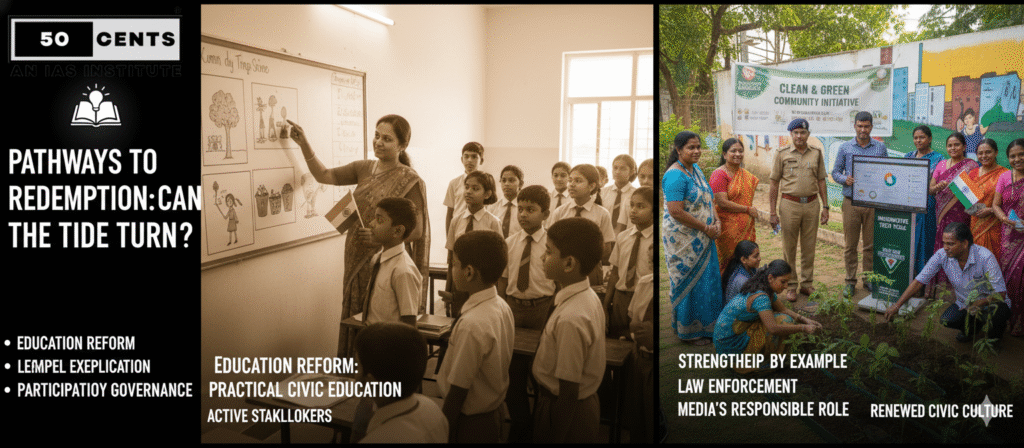
Optimism lies in the potential for change through education reform, leadership exemplification, and participatory governance. Institutions must embed civic responsibility deeply within their ethos. Educational curricula need radical revision to emphasize practical civic education, encouraging students to become active stakeholders in their communities.
Leaders—political and administrative—must lead by example, fostering a culture of accountability. Public policies should incentivize responsible behavior while penalizing negligence and corruption.
Community involvement, strengthened law enforcement, media’s responsible role, and innovative technological tools also form the pillars of a renewed civic culture that India urgently needs.
Pathways to Redemption: Can India's civic tide truly turn? This image illustrates the vital role of education reform, strong leadership, and community action in building a citizen-conscious nation. It's about empowering students, inspiring leaders, and leveraging technology for a renewed civic culture. What do you think is the most crucial step? #CivicEducation #IndianLeadership #CommunityAction #GoodGovernance #50CentsIAS
Conclusion
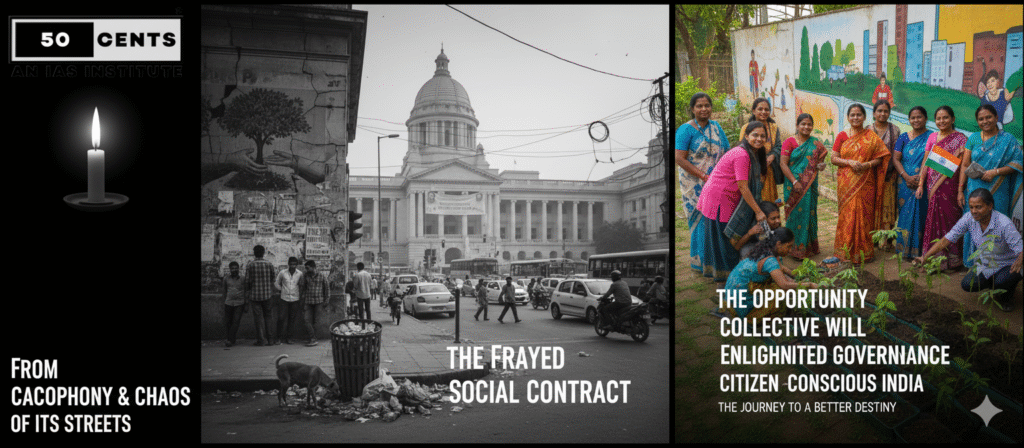
From the cacophony of its streets to the quiet chambers of its secretariats, India's struggle with civic sense is both profound and persistent. Yet, within this challenge lies the opportunity—a chance to stitch back the frayed social contract through collective will, enlightened governance, and a revitalized commitment to democratic ideals. The journey may be arduous, but the destiny of a truly citizen-conscious India hinges on its success.
From the raw reality of crowded, chaotic streets to the calm determination in secretariats, this image captures India's emotional and true struggle toward restoring civic sense, with 50 CENTS IAS Institute branding the movement for change.
Frequently Asked Questions (FAQ):
1. What is Civic Sense and why is it crucial for a democratic society?
Civic sense comprises an individual's ethical responsibility toward the community, promoting social order, law adherence, and public well-being. It underpins democracy by ensuring cooperative citizenship and trust in institutions.
2. What factors have contributed to the erosion of civic sense in contemporary India?
Weak enforcement, poor civic education, apathetic leadership, infrastructural deficits, and societal attitudes like “mera kya jaata hai” collectively degrade civic responsibility and public behavior.
3. How does a decline in civic sense affect governance and social harmony?
It fosters disorder, corrodes institutional trust, increases corruption, and spawns communal tensions, thereby impairing democratic governance and social cohesion.
4. What role should education play in cultivating civic sense?
Education must go beyond theory to instill lived values of responsibility, respect, and community participation through experiential learning and engagement.
5. Why does civic education fail in Indian schools?
Curriculum focus on rote learning and lack of practical exposure results in ineffective transmission of civic values.
6. How do political and administrative leaders influence civic sense?
Leaders’ conduct sets societal norms; unethical leadership undermines public ethics, while exemplary leaders inspire collective responsibility.
7. What social behaviors typify poor civic sense in India?
Common behaviors include littering, traffic violations, disregard for queues, corruption tolerance, and disrespect for public property.
8. Explain the “mera kya jaata hai” mindset and its impact.
This cynical attitude prioritizes individual convenience at public cost, weakening collective commitment and facilitating lawbreaking.
9. How do urban infrastructure deficits exacerbate civic problems?
Insufficient public amenities and poor maintenance frustrate citizens, often leading to neglect and misuse of community resources.
10. What constitutional provisions address civic duties?
Article 51A enumerates fundamental duties including civic responsibilities expected of every Indian citizen.
11. Why is legal enforcement of civic laws inconsistent?
Governance weaknesses, corruption, and political considerations impede uniform enforcement and accountability.
12. How can media and civil society shape civic sense?
Responsible media can educate and mobilize, while civil groups can foster community participation, though scale and consistency remain challenges.
13. Can you cite examples of cities with improved civic sense?
Cities like Indore, Surat, and Mysore showcase improved public discipline through innovative governance and community engagement.
14. How does bureaucratic corruption impact civic responsibility?
It erodes institutional credibility, demoralizes citizens, encourages shortcuts, and perpetuates civic apathy.
15. What is the impact of civic negligence on India’s youth?
It stunts moral development, nurtures disengagement, and threatens democratic future by eroding civic consciousness.
16. How is India’s civic sense perceived internationally?
India faces stereotypes of disorder and superficial law respect, impacting its global image and diaspora interactions.
17. What reforms can enhance civic education?
Curricular overhaul, practical civic exercises, value-based education, and community service integration.
18. What steps can leaders take to promote civic culture?
Transparent governance, anti-corruption vigilance, public accountability, and exemplary personal conduct.
19. How can technology aid civic sense development?
Digital platforms enhance transparency, citizen feedback mechanisms, and public awareness campaigns.
20. How can individuals personally foster civic responsibility?
True We Don’t Have Civic Sense, We Are All In Same Box. 😔
I would like to extend my heartfelt appreciation to 50-CENTS IAS Institute and Upasana Sarin Ma’am for publishing such a compelling and thought-provoking blog on civic sense in India. The article is well-researched and presents the issue with clarity, depth, and relevance for UPSC aspirants. Thank you for your dedication to delivering high-quality content that truly supports aspirants’ understanding of complex societal themes.
I would like to extend my heartfelt appreciation to 50-CENTS IAS Institute and Upasana Sarin Ma’am for publishing such a compelling and thought-provoking blog on civic sense in India. The article is well-researched and presents the issue with clarity, depth, and relevance for UPSC aspirants. Thank you for your dedication to delivering high-quality content that truly supports aspirants’ understanding of complex societal themes.

 50-CENTS | An IAS Institute.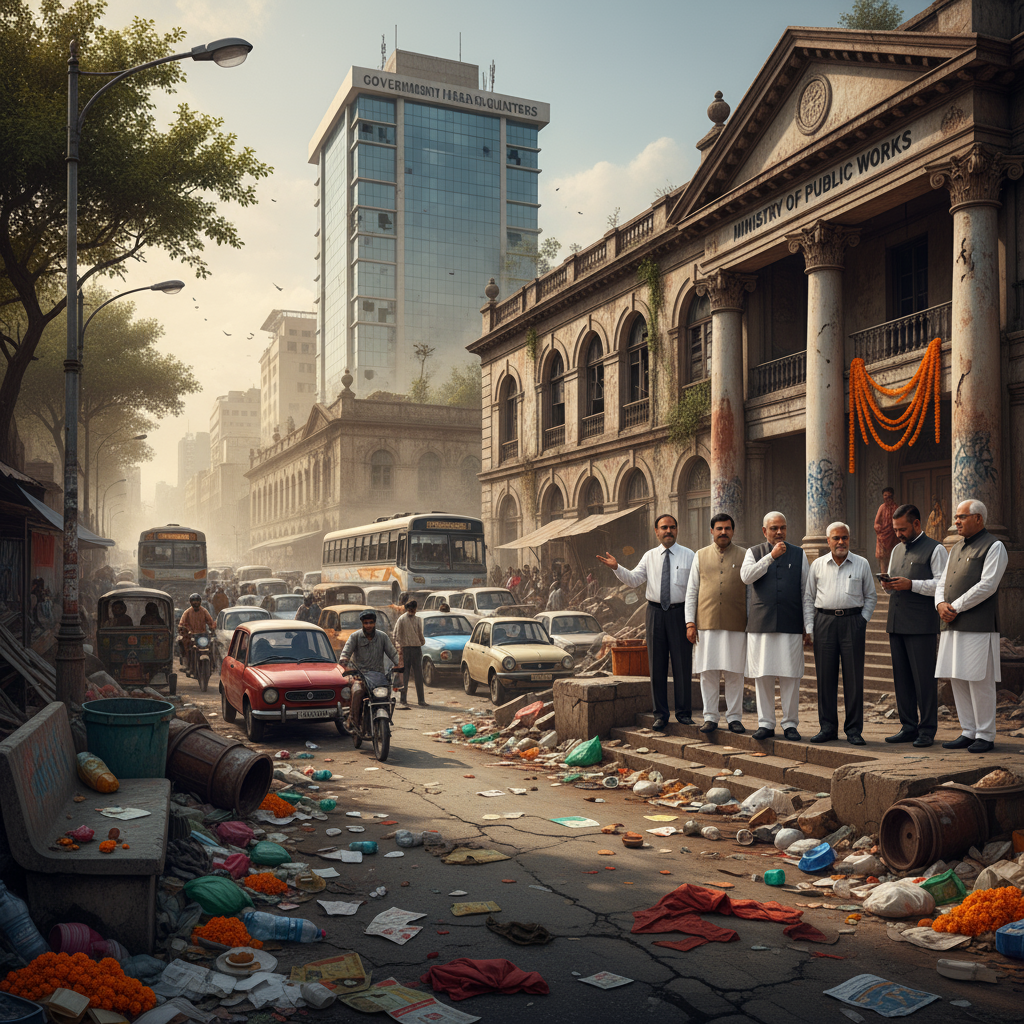


Sanjna Singh
Awesome 💯
Ridhima Goel
True We Don’t Have Civic Sense, We Are All In Same Box. 😔
I would like to extend my heartfelt appreciation to 50-CENTS IAS Institute and Upasana Sarin Ma’am for publishing such a compelling and thought-provoking blog on civic sense in India. The article is well-researched and presents the issue with clarity, depth, and relevance for UPSC aspirants. Thank you for your dedication to delivering high-quality content that truly supports aspirants’ understanding of complex societal themes.
Ridhima Goel
True We Don’t Have Civic Sense, We Are All In Same Box. 😔
Ankit Soni
I would like to extend my heartfelt appreciation to 50-CENTS IAS Institute and Upasana Sarin Ma’am for publishing such a compelling and thought-provoking blog on civic sense in India. The article is well-researched and presents the issue with clarity, depth, and relevance for UPSC aspirants. Thank you for your dedication to delivering high-quality content that truly supports aspirants’ understanding of complex societal themes.